
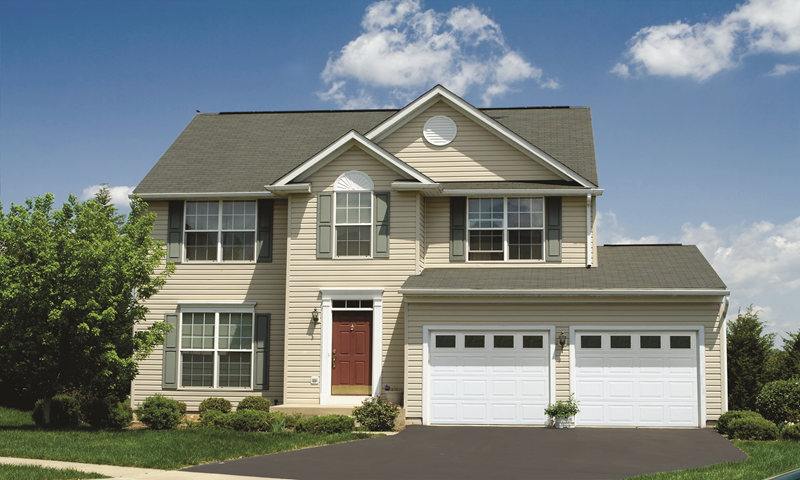
When you think about making your home more environmentally friendly, most people focus on appliances, lighting, and insulation. However, your garage door plays a bigger role in energy use and environmental impact than you might expect.
If your garage is attached to your house, it can directly affect indoor temperatures, energy consumption, and overall efficiency. That means your garage door contributes to your home’s carbon footprint.
In this guide, our team will show you how to calculate your garage door’s carbon footprint and, most importantly, what you can do to reduce it.
What Is a Garage Door Carbon Footprint?
A carbon footprint refers to the total amount of greenhouse gas emissions associated with a product or system. For garage doors, this spans from raw material extraction and manufacturing through transportation, daily operation, and eventual disposal or recycling.
Key Factors That Affect Your Garage Door’s Environmental Impact
Not all garage doors are created equal. Some are much more sustainable than others, depending on several key factors.
- Materials and Manufacturing
The materials used in your garage door determine much of its environmental footprint from day one.
- Steel doors are durable, secure, and fully recyclable, but steel production is energy-intensive. The upfront carbon cost is high, though high-quality steel doors that last 20-30 years can offset this through longevity and recyclability.
- Aluminum doors offer comparable recyclability and lower weight, reducing transportation emissions. However, aluminum production requires even more energy than steel. The advantage comes during use: lighter weight means less strain on openers and easier operation.
- Wood doors can be renewable if sourced from responsibly managed forests (FSC or PEFC certified). Trees absorb CO2 as they grow, storing carbon in the wood itself. The downside is that wood requires regular maintenance, painting, sealing, and treating, which adds chemical use and labour. Without maintenance, wood deteriorates faster.
- Composite materials combine recycled wood fibres with polymer resins, resisting warping while requiring less maintenance than solid wood. Environmental impact depends on the ratio of recycled content to petroleum-based resin.
- Fibreglass doors offer excellent insulation and resist denting, but their production involves resins with associated environmental costs. They’re lightweight and require minimal maintenance.
The key is to choose materials that match your climate and usage patterns. A door lasting 30 years with minimal maintenance will always outperform a cheaper option requiring replacement every decade.
- Energy Efficiency and Thermal Performance
During summer, garages can reach 120°F or higher, radiating heat into adjacent living spaces. Your air conditioning battles this constant influx, running longer cycles and consuming more electricity. Winter presents the opposite problem, where heated air escapes while cold air infiltrates through gaps.
Garage doors use R-value ratings. Higher numbers mean better insulation. An uninsulated door might have an R-value of 0-2, while well-insulated models reach R-16 to R-18.5. Upgrading to an insulated garage door can reduce heat transfer by up to 70%, significantly lowering HVAC energy consumption.
Weather stripping creates an airtight seal when the door closes. Even well-insulated doors lose effectiveness if gaps exist around edges.
- Automatic Openers and Electrical Consumption
Modern garage door openers consume electricity daily, though amounts vary by type:
- Chain-drive openers: 350-600 watts during operation
- Belt-drive openers: 300-500 watts
- Direct-drive and jackshaft openers: 200-300 watts (most efficient)
Standby power consumption adds up. Older models draw 4-10 watts continuously, totalling 35-88 kWh annually just from standby. Newer Energy Star-rated openers reduce this to under 2 watts.
Smart openers with Wi-Fi add convenience but increase electrical consumption slightly. However, their ability to notify you if the door is left open can prevent unintentional energy loss.
- Lifespan and Maintenance
A garage door lasting 30 years with proper maintenance avoids the manufacturing, transportation, and disposal emissions of multiple replacement cycles. Regular maintenance practices, such as lubricating moving parts, tightening hardware, checking balance, and replacing worn weather stripping, extend the lifespan.
How to Estimate Your Garage Door’s Carbon Footprint
Start with these practical assessments:
- Physical inspection: Stand inside your closed garage on a sunny day with the lights off. Can you see daylight around the door edges? That’s air leakage. Run your hand along the perimeter. Temperature differences or air movement indicate poor sealing.
- Temperature monitoring: Track garage temperatures over several days. If temperatures swing wildly, matching outdoor extremes rather than staying moderated, your door provides inadequate insulation.
- Energy bill analysis: Compare heating and cooling costs year over year. Unexplained increases might point to deteriorating garage door performance.
- Door age and condition: Doors older than 15-20 years likely lack modern insulation standards. Visible damage, rust, or warping suggests the door no longer performs as designed.
Rough calculation
An uninsulated garage door in a moderate climate can add 10-15% to heating and cooling costs if the garage is attached.
In a 2,000-square-foot home, spending $150 monthly on HVAC, that’s $180-270 annually, purely from garage door inefficiency.
Over a 20-year door lifespan, that totals $3,600- $ 5,400 in excess energy costs, not including associated carbon emissions.
Sustainable Upgrades for a Greener Garage
Making your garage more eco-friendly doesn’t just stop with the door itself. To further reduce energy usage and environmental impact, consider these simple upgrades:
- Insulate garage walls and ceiling: If you have living space above the garage, wall and ceiling insulation becomes critical. Even the best garage door can’t overcome heat transfer through uninsulated walls.
- LED lighting with motion sensors: Motion-activated LED lighting provides illumination when needed while consuming minimal electricity, typically 9-15 watts compared to 60-100 watts for incandescent bulbs.
- Energy-efficient appliances: Older refrigerators in garages consume 1,000-1,400 kWh annually. Modern Energy Star models use 400-600 kWh for the same capacity, a reduction of 600-800 kWh yearly, equivalent to 400-560 pounds of CO2 emissions prevented.
- Solar panels: Garage roofs often offer excellent locations for solar panels. A modest 2-3 kW system can offset your home’s garage-related electrical consumption entirely.
- Proper ventilation: Installing passive vents or solar-powered attic fans prevents excessive summer heat buildup, reducing the thermal load on your home.
These small changes help lower your carbon footprint and save on long-term energy costs.
Conclusion
Your Raynor garage door may seem like a small part of your home, but it has a meaningful impact on energy use and sustainability. From materials and manufacturing to daily performance, every aspect contributes to its carbon footprint.
Start with simple improvements, consider long-term solutions, and when needed, rely on a trusted dealer to guide you. Small changes can lead to a big difference over time.
Make Your Garage More Sustainable Today
Work with a Raynor authorized dealer near you today to get the right combination of durability, efficiency, and long-term value for your garage door.
