
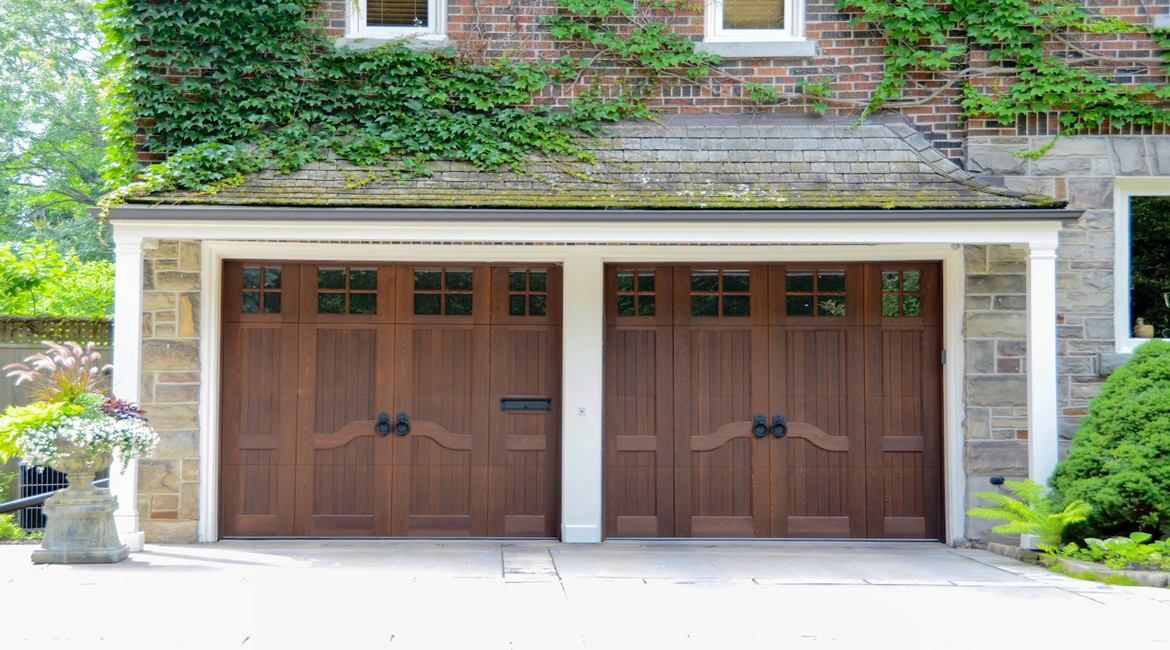
Selecting the right garage door can feel like a big decision. You want one that looks great, offers maximum security, and works smoothly for years. In this guide, you’ll learn how to choose between a sectional and roller garage door by comparing design, cost, durability, insulation, and security. Our team at Raynor Garage Door can help you decide which garage door style fits your home and budget.
What Is a Sectional Garage Door?
A sectional garage door is made of hinged panels that move along tracks on the sides and ceiling. When you open it, the panels bend at the joints and tuck neatly under the roof.
Core features and advantages
- Built-in insulation between panels to reduce heat loss or gain.
- Smooth, quiet operation thanks to nylon rollers and sealed tracks.
- Wide range of materials, including steel, wood, and aluminum.
- Custom designs for windows, paint, and hardware.
Materials and insulation
Sectional doors often use steel skins filled with foam insulation. R-values typically range from R6 to R16, which can lower your energy bills by up to ten percent when your garage connects to the living space. The U.S. Department of Energy confirms that insulation in attached garages can reduce energy costs by 10–20%.
Style options
Panel profiles include flush, raised, and carriage‑house designs. Window options can be clear, frosted, or decorative. Steel doors can be painted any colour, while wood doors come in natural finishes.
| Pros | Cons |
| Excellent insulation (R6–R16) | Requires more ceiling space (12–18 inches) |
| Wide style choices with panels and windows | Higher upfront cost ($800–$2,500+) |
| Quiet operation with nylon rollers and sealed tracks | More complex installation involving tracks and springs |
| Long lifespan (20+ years with proper maintenance) | Can be pricier for custom designs |
What is a Roller Garage Door?
A roller garage door rolls up into a tube above the opening using narrow slats. The tube sits behind a hood or cover to keep the curtain protected.
Key features and benefits
- Compact design that frees up ceiling space for lighting or storage.
- Simple mechanism ideal for low headroom or compact garages.
- Faster open and close speeds compared to many sectional doors.
- Available in single-skin or insulated versions.
Insulation and finish options
Standard roller doors use a single sheet of steel known as a curtain. Upgraded slats with foam insulation reach about R5. Slats come in smooth, ribbed, or micro‑groove profiles, and many are colour-coated to match your home’s trim.
When a Roller Door is the Right Choice
Roller doors work well in garages with limited space above the opening. They also suit home workshops or garages with loft storage. If quick access and tight headroom matter the most, a roller door fits best.
| Pros | Cons |
| Compact headroom requirement (5–7 inches) | Limited insulation (R3–R5) |
| Fast open and close speeds (6–8 inches per second) | Fewer customization options |
| Simple mechanism with fewer moving parts | Annual spring and hood maintenance is needed |
| Lower initial cost ($500–$800 installed) | Shorter lifespan (10–15 years under heavy use) |
Side-by-Side Comparison
Here’s how sectional and roller doors stack up on the key factors.
- Cost Comparison
Like most homeowners, you might ask, Are sectional garage doors more expensive than roller doors? Basic single-skin roller doors start around $500–$800 installed. Insulated sectional doors start at $800–$1,200 installed. High-end sectional styles with decorative windows and thicker insulation can exceed $2,500. Contact a Raynor Authorized Dealer for a cost estimate.
- Durability
With routine maintenance, sectional garage doors can last 20 years or more. Steel panels resist dents and corrosion when finished in the factory. Roller doors can match that lifespan, though springs and curtains may need service every 5–10 years. The National Association of Home Builders reports that residential doors last 15–25 years under normal use.
- Insulation and Energy Efficiency
Sectional doors with higher R-values outperform roller doors if your garage is heated or attached to a living space. Roller doors top out around R5, while sectional doors reach up to R16.
- Security and Maintenance
Both styles can be highly secure with modern locking systems and openers. Sectional doors latch along the side tracks and have heavy bottom seals. Roller doors lock at the bottom curtain and use sturdy steel locking bars. Maintenance routines differ:
- Sectional doors: Inspect panels, hinges, rollers, and tracks twice a year.
- Roller doors: Check slats, springs, tube, and hood cover annually.
How to Decide Which Fits Your Home
- Measure your space – Roller doors need just a few inches of headroom. Sectional doors require up to 18 inches of ceiling space for tracks.
- Define your use – Will you heat or cool the garage? If so, a well‑insulated sectional door pays off.
- Match your home style – Sectional doors offer panels, windows, and colour options for more curb appeal. Roller doors keep a clean, minimalist look.
- Plan your budget – Factor in installation and long‑term energy costs. An insulated sectional door can save more on heating and cooling if your garage is climate‑controlled.
Frequently Asked Questions
Can you insulate a roller garage door?
Yes. You can add foam-filled slats that raise the R-value to around R5. That extra insulation helps keep your garage cooler in summer and warmer in winter. Many people with attached garages have noticeable energy savings right away.
Which works better for tight spaces, roller or sectional?
Roller doors need only about five to seven inches of headroom above the opening. Sectional doors usually require twelve to eighteen inches of clear ceiling space for their track system. If you have low ceilings or loft storage, a roller door makes sense. But if space allows and you want panel designs or windows, a sectional door adds curb appeal.
How fast do roller doors open vs sectional doors?
Modern roller doors can open at six to eight inches per second, meaning they reach full height in about three seconds. Sectional doors typically move at four to six inches per second. The speed difference is small but can save a few seconds each time you enter or exit.
What maintenance does each door need?
Sectional doors require lubrication on hinges, rollers, and springs every six months. You should also inspect weather seals and tighten any loose bolts. Roller doors need an annual check of spring tension, roller tube, and hood cover to prevent dirt buildup.
How secure are roller doors compared to sectional doors?
Both door types are very secure with quality locks and openers. Sectional doors latch at multiple points along their tracks. Roller doors use sturdy steel locking bars at the bottom of the curtain. Installing a smart opener with rolling code technology adds an extra layer of protection.
Conclusion
Choosing between a sectional and roller garage door comes down to headroom, insulation needs, curb appeal, and budget. Sectional doors win in energy efficiency and customization options. Roller doors excel in compact spaces and have a lower initial cost.
Schedule a consultation today?
Ready for a new garage door, or do you need help deciding which garage door is best for you? Contact your local Raynor Authorized Dealer today for assistance.
